Individualized Academic Program
A real school day, built for how your child actually learns.
You have likely been told what your child cannot do in a typical classroom. Here, the classroom molds itself to fit your child, not the other way around. The Talk School delivers a full individualized academic program across an 11-month school year, covering reading, math, science, and social studies, so learning never has to pause for a long summer.
Real Academics, Real Progress
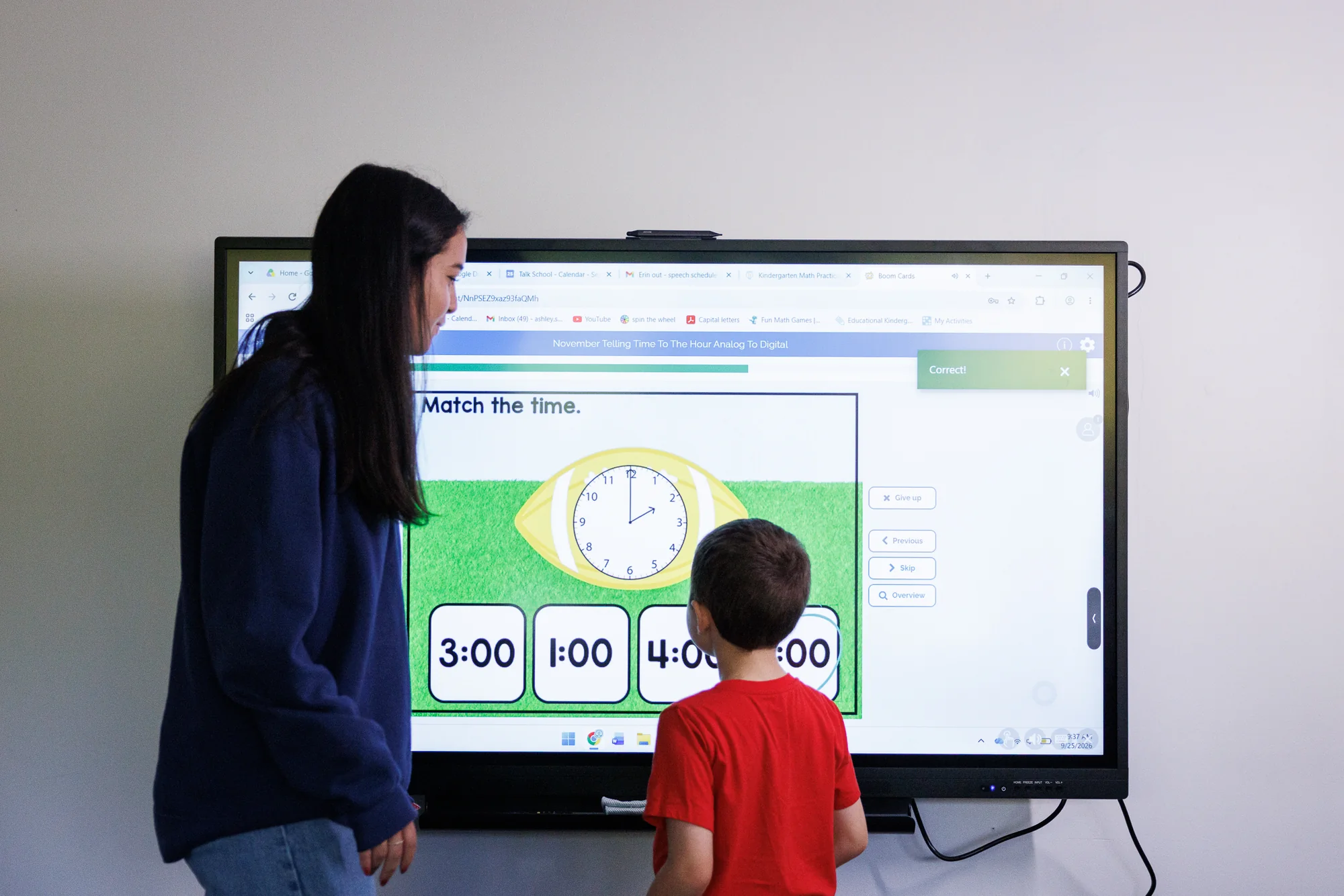
Reading, math, science, and social studies, taught at a pace your child can keep
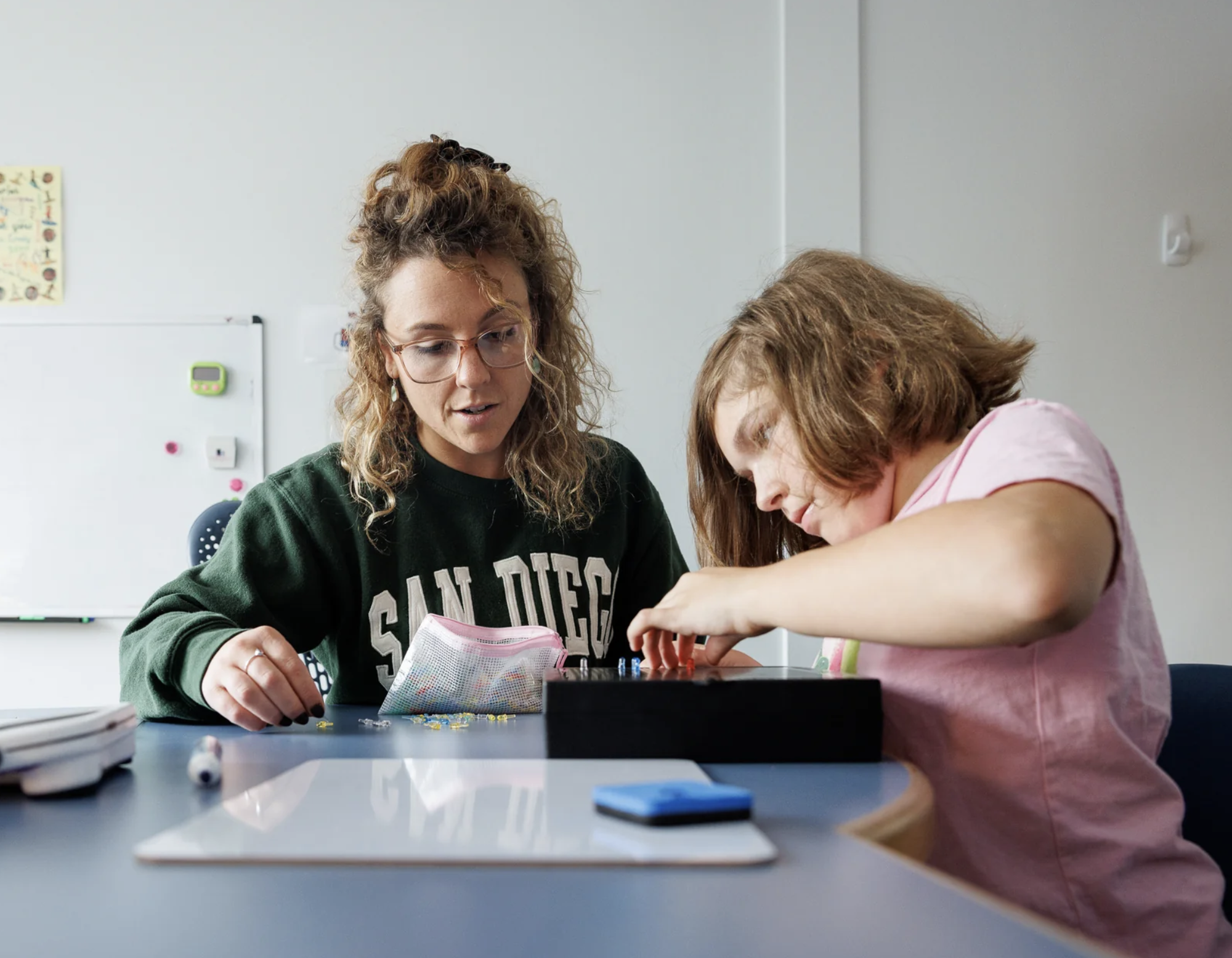
Too often, children with language differences are placed in programs that quietly lower the bar, focusing only on what a child is assumed unable to do. We start from the opposite belief: we presume competence in every learner, and we build a full academic education around it. Academic growth and language growth are not separate goals here. They happen in the very same lesson.
Students learn core subjects in small classrooms of no more than eight, with instruction shaped around each student’s current level rather than their age or grade. Progress is tracked closely, so the moment a child is ready for more, the work grows with them.
The Talk School Difference
A nest-like learning environment where everything gets noticed
A school year built so progress never slips away.
Eleven months of school, and a plan that keeps moving with your child.
Most students lose ground every summer, and for a child who has worked hard to build a skill, that loss can mean starting over. That is why our school year runs eleven months, not the traditional ten, so the progress your child fights for all year has nowhere to slip away to. We also track that progress closely, week to week, not just at report card time. When a student is ready for the next step, we know it right away, and their plan moves with them. Nothing waits for a semester to end.
Small classrooms, taught at your child's pace
With no more than eight students in a room, every child is known, not just counted.
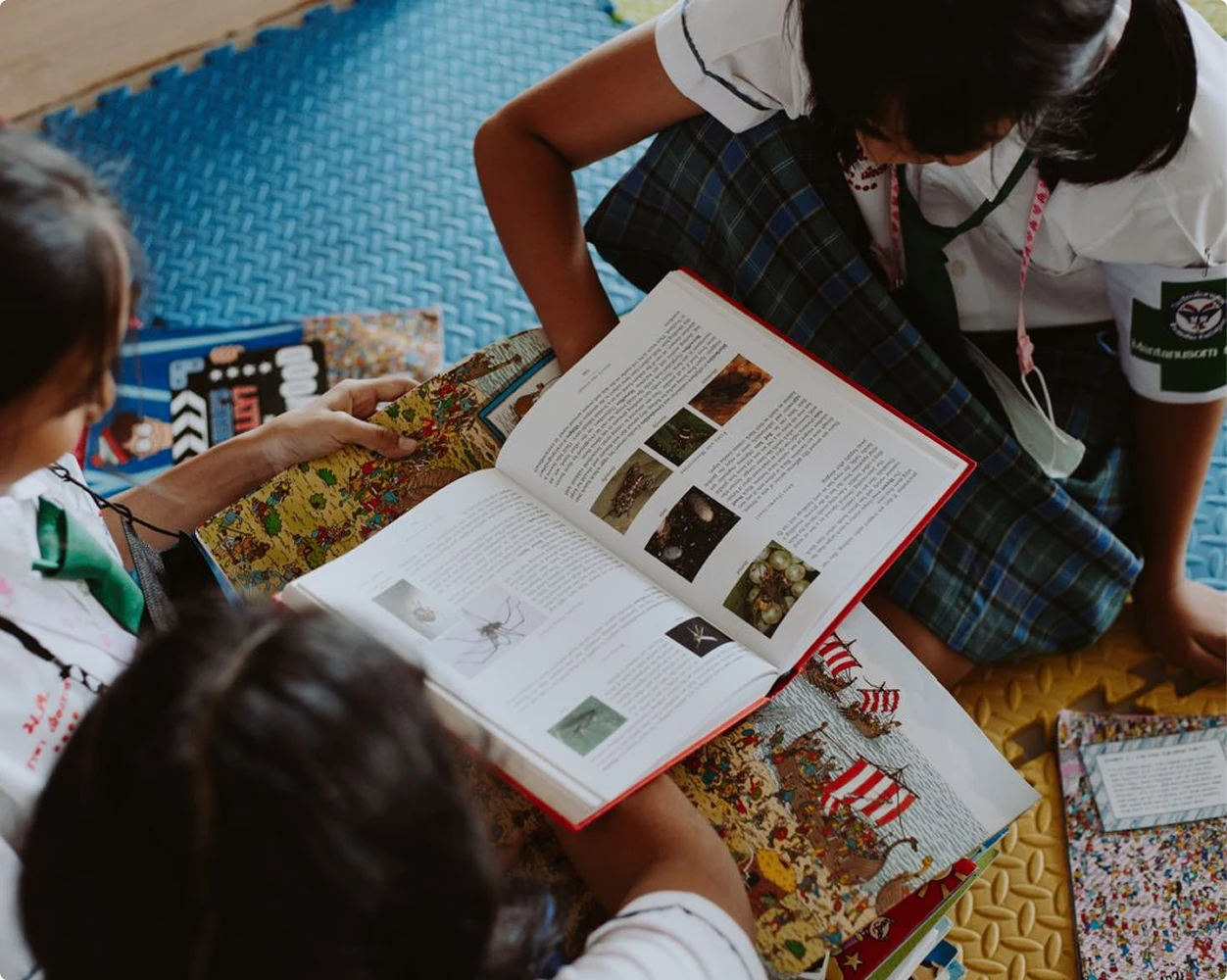
Our classrooms are limited to a maximum of eight students, small enough that no child goes unnoticed and no one slips through the cracks. Teachers know each student well enough to catch the quiet moments that matter, the ones that get missed in a larger class size. That closeness lets us teach to the student in front of us, not the grade on their file. Instruction is shaped around each child's current academic level, whatever that looks like, so a student is never asked to sit through work that is over their head or under their ability.
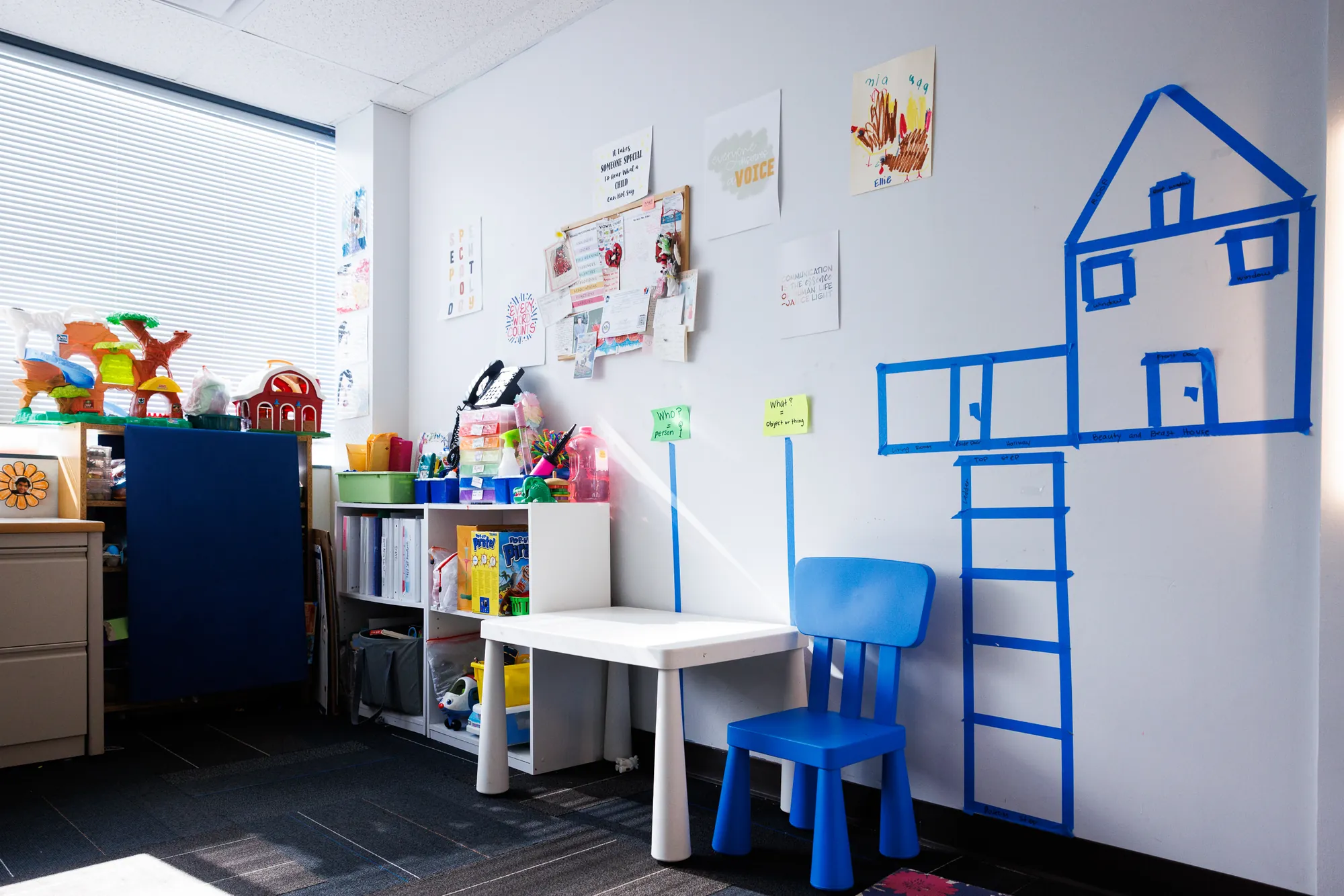
“The ability and willingness to identify and adapt to what is working for my son is wonderful. For this reason, he stands up on a whiteboard, he has a snack during the morning calendar, and he has his own space to move when he needs it. At the same time, he is learning social studies and math like every other student. They meet him where he is, and he is finding success.”
A Talk School Parent - lightly paraphrased for clarity
Our Approach
See how academics fit into the rest of the day
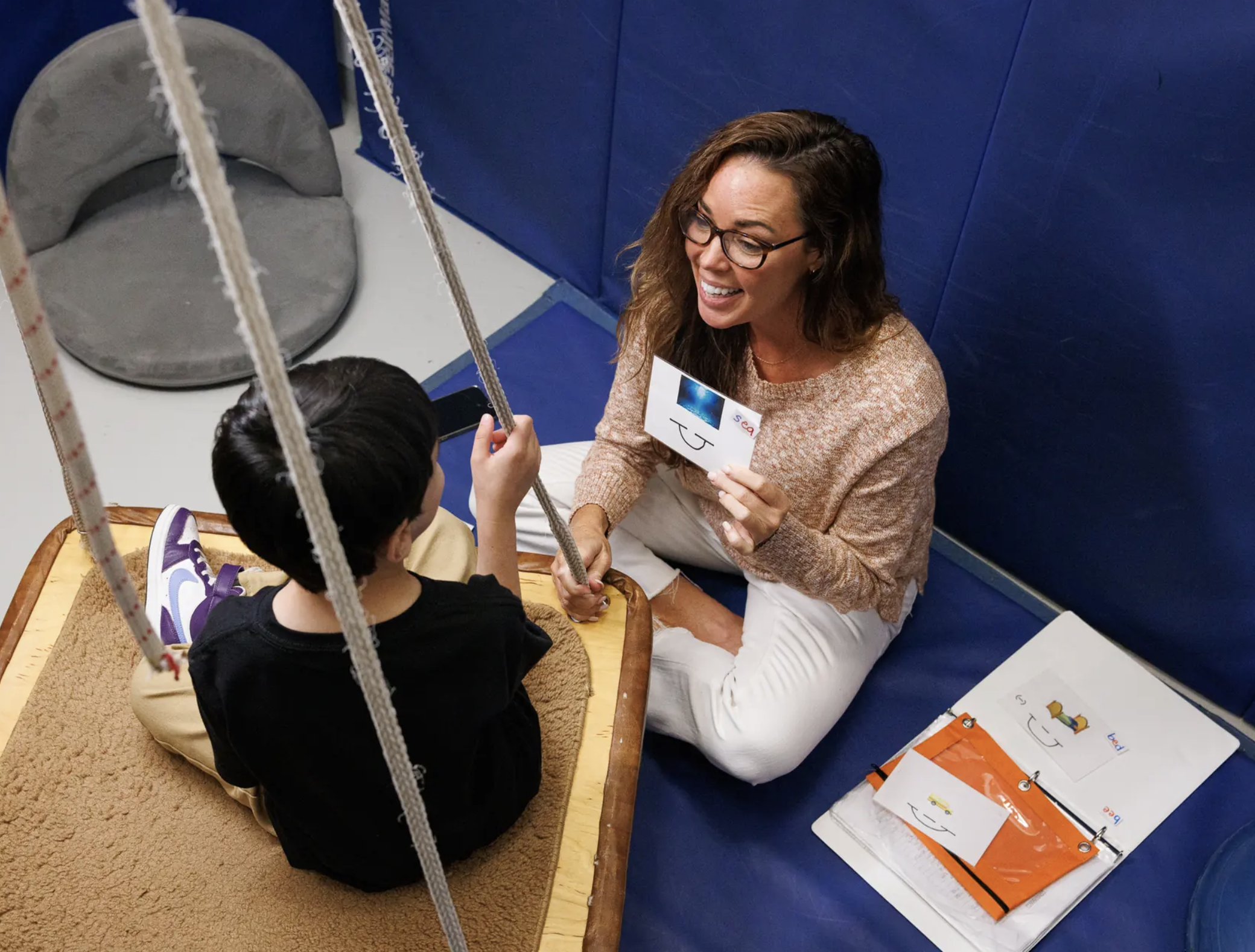
Our Therapies
Academics and therapy share the same day. See the four therapeutic approaches woven right into the classroom.
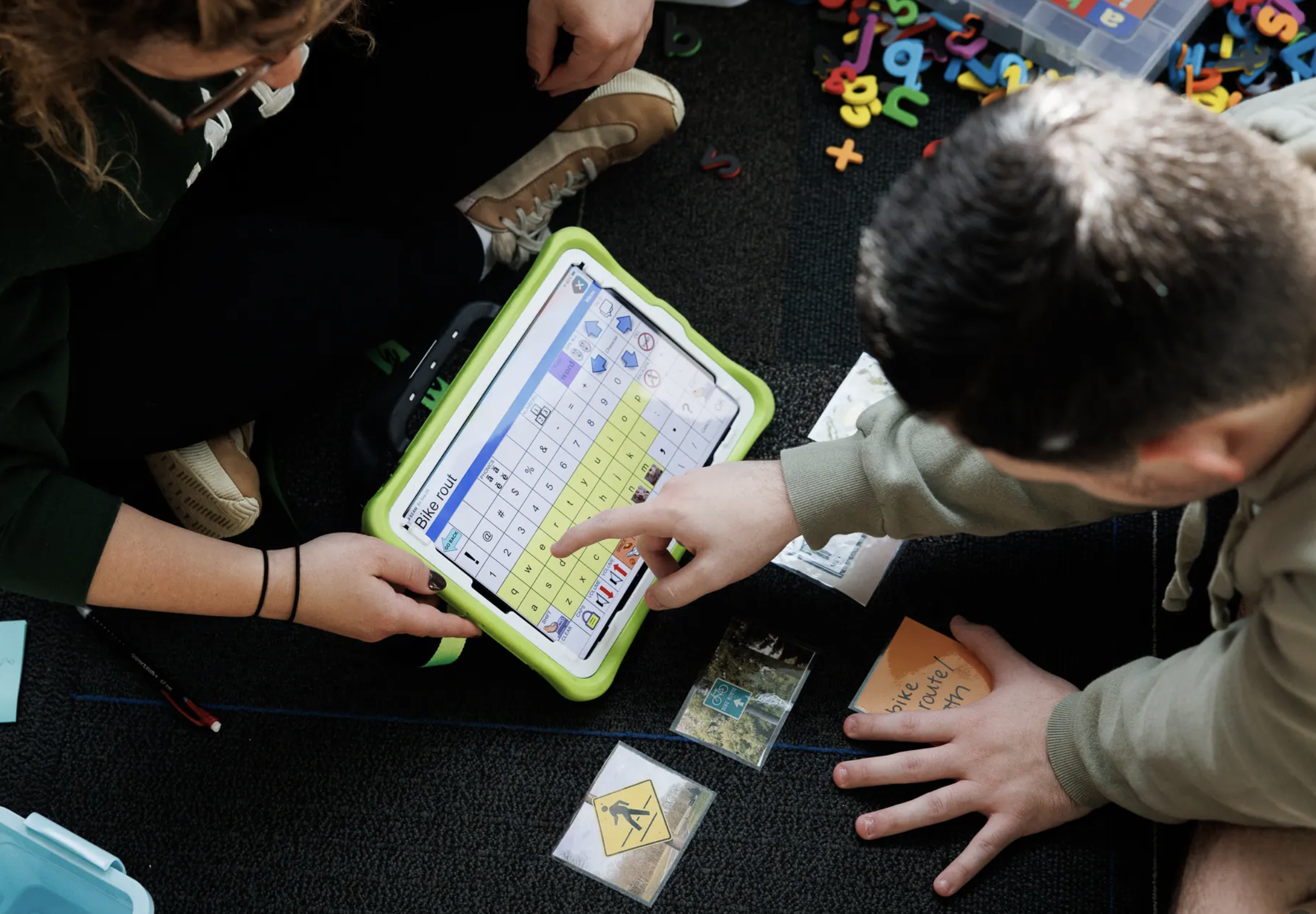
Our Methods
The Association Method and SPIRE are how language and reading are taught. See how the two curricula build on each other.
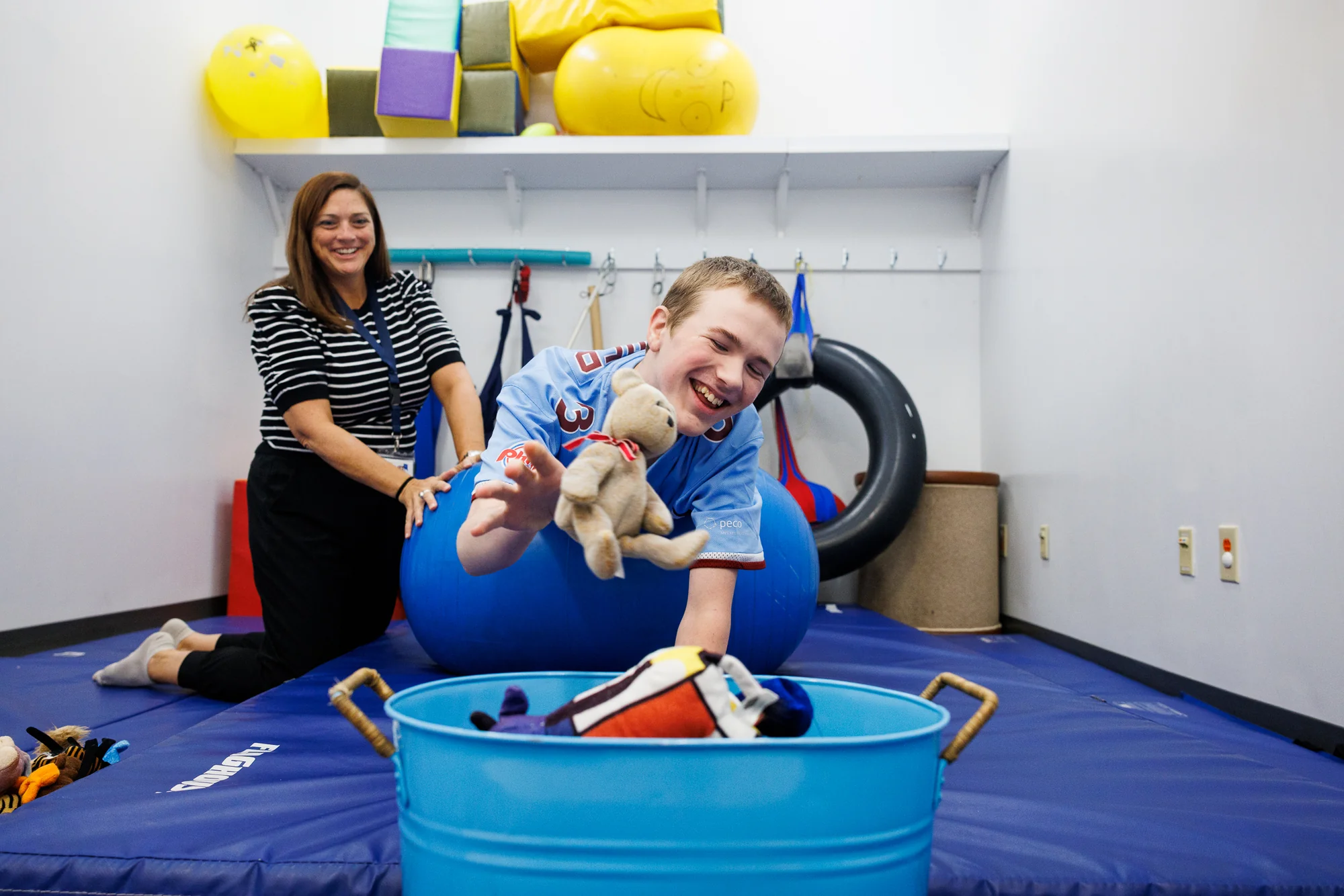
Joyful Learning
Language grows through joy, too. See how music, art, gardening, and dog therapy give every child new ways to express themselves.
Next Step
See a classroom in action, and start your child’s path
Tour The Talk School
The best way to understand Talk is to see it. Come spend time in our classrooms and watch a day unfold.

Your Path to Enrollment
Wondering how to begin? Walk through the steps, the timeline, and how enrollment is typically funded.
Frequently asked questions
Common questions about our academics
Will my child still get a real academic education here?
Yes. Students study reading, math, science, and social studies, taught in a way built around how each child actually learns, across an 11-month school year.
How are classes grouped?
Classrooms are small, no more than eight students, and grouped by academic and communication level rather than strictly by age.
What does “classroom ready” mean?
It means a child can take part in a group setting, with support, for meaningful stretches of the day. It looks different for every child, and our admissions team can help you understand what it means for yours.
How is progress tracked?
Instruction is data-driven: teachers and therapists track progress closely and adjust a student’s plan as soon as they are ready for the next step.
Why an 11-month school year?
A longer year limits the skill regression that a long summer break can cause, so students keep building on what they have learned.