Creative and Expressive Therapies
Room to laugh, create, and just be a kid.
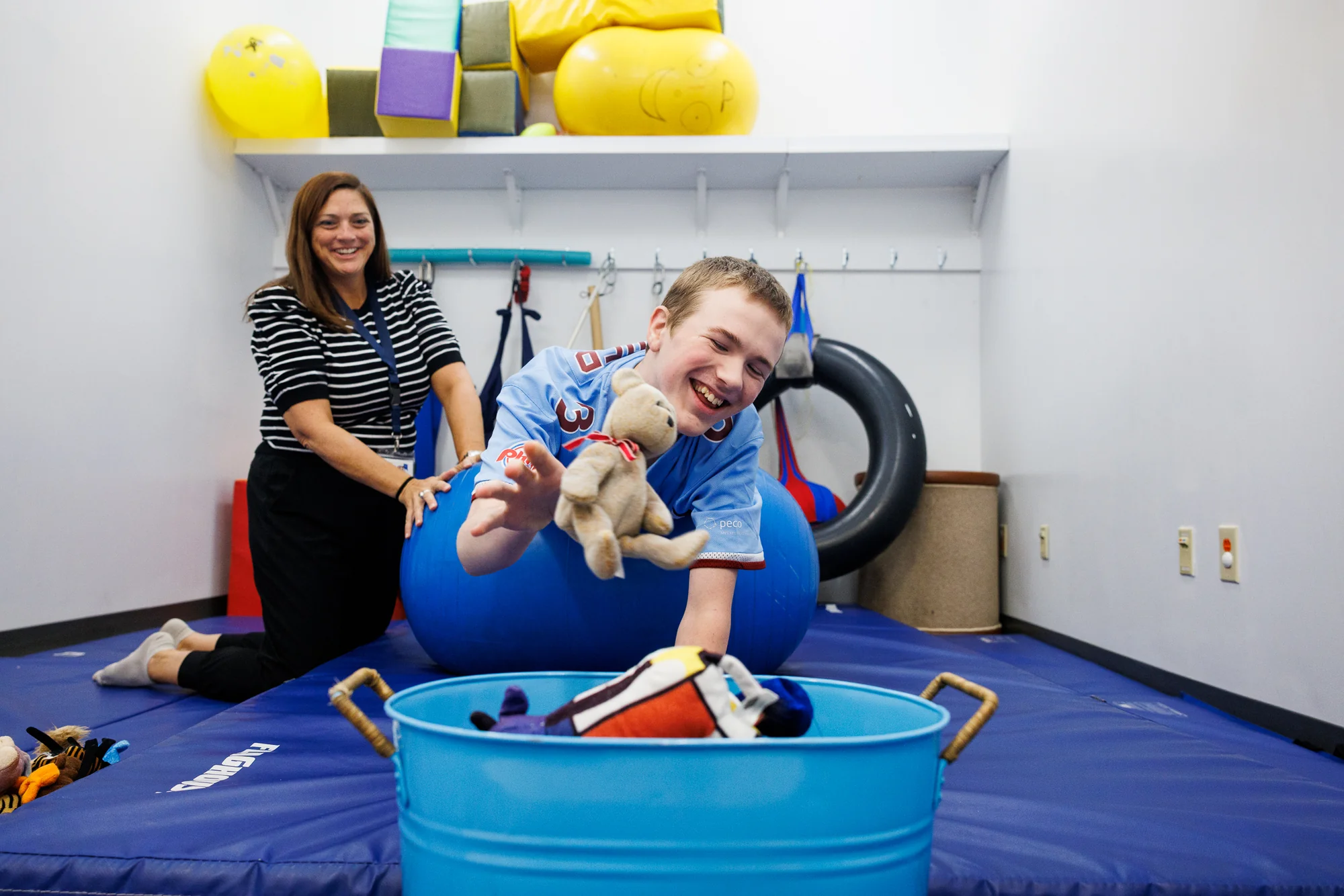
Underneath all the therapy and academics, this is still a childhood. Music therapy, art, gardening and time with our beloved therapy dog give every student new ways to express themselves and connect, each week, as part of the creative and expressive therapies woven into their days.
Why Joy Is Part of the Model
Creative expression builds confidence, connection, and communication
For students who communicate differently, music, art, active play, and connection with animals often open doors that words alone cannot. These are not rewards tacked onto the end of a hard day.
They are real therapeutic and developmental work, giving every child a lower-pressure way to express themselves, build social connection, and feel genuine joy. And they serve the same goals as the rest of the day. A child who hums along, paints a feeling, or calms beside a gentle dog is practicing communication, regulation, and confidence, often without even realizing it.
Joyful Learning
Music, art, gardens, and a very good dog
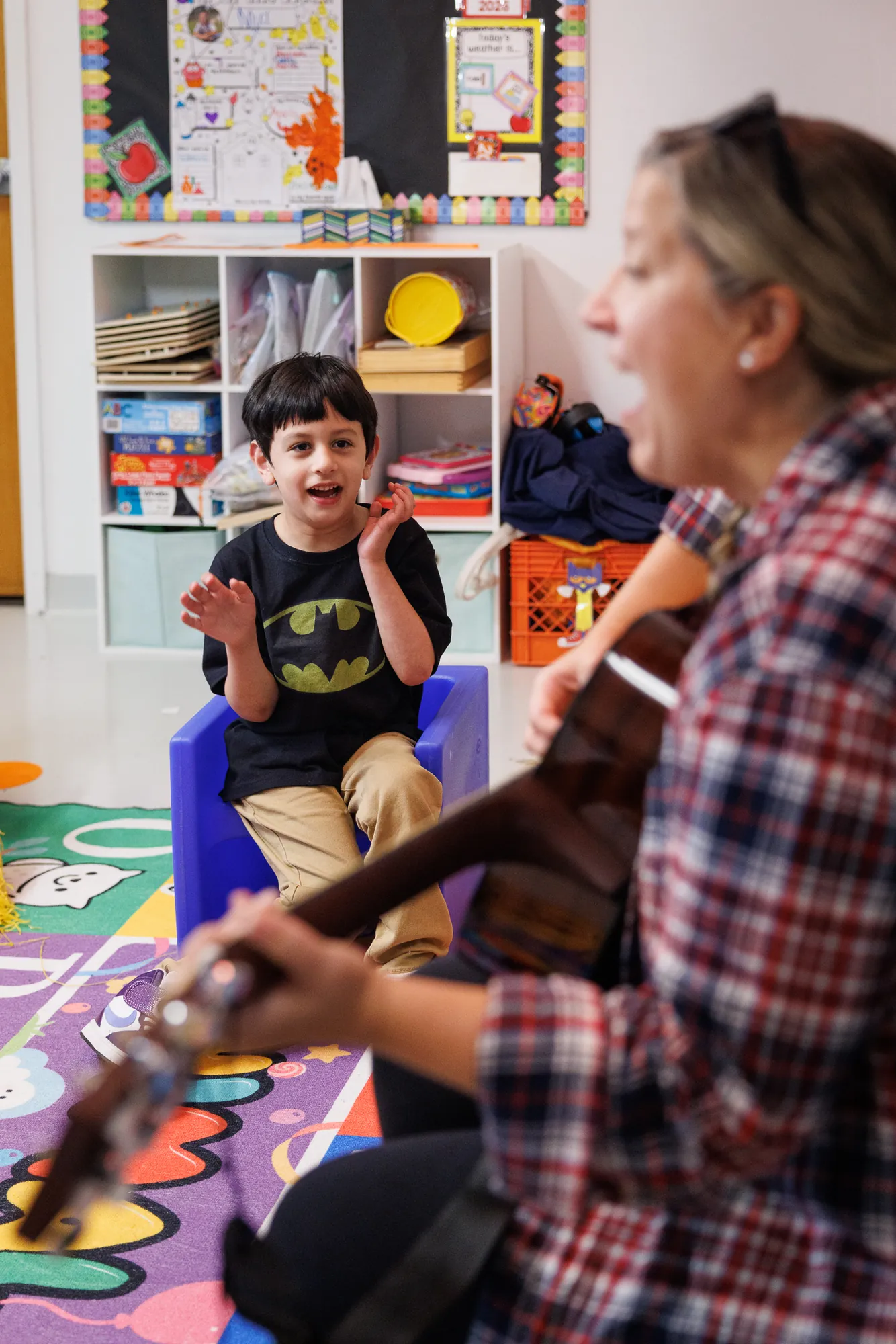
Where music opens a door words can't
For a child who finds spoken words difficult, a song can reach them first.
Rhythm, melody, and instruments give students a joyful, low-pressure way to practice turn-taking, timing, and self-expression, all without the pressure of finding the right word. Music therapy sessions are built around real connection, not performance, so a child can lead, respond, and be heard on their own terms.
Over time, that connection becomes a bridge. The back-and-forth of a simple rhythm game teaches the same give-and-take a conversation needs, and the confidence a child builds by banging a drum or singing a phrase often carries into how they communicate the rest of the day. It never feels like therapy. It feels like play, which is exactly the point.
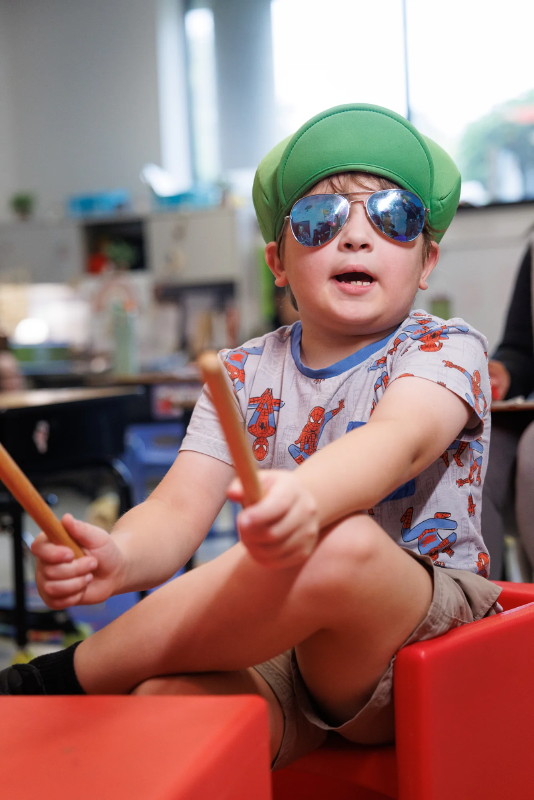
A canvas for everything words can't say yet.
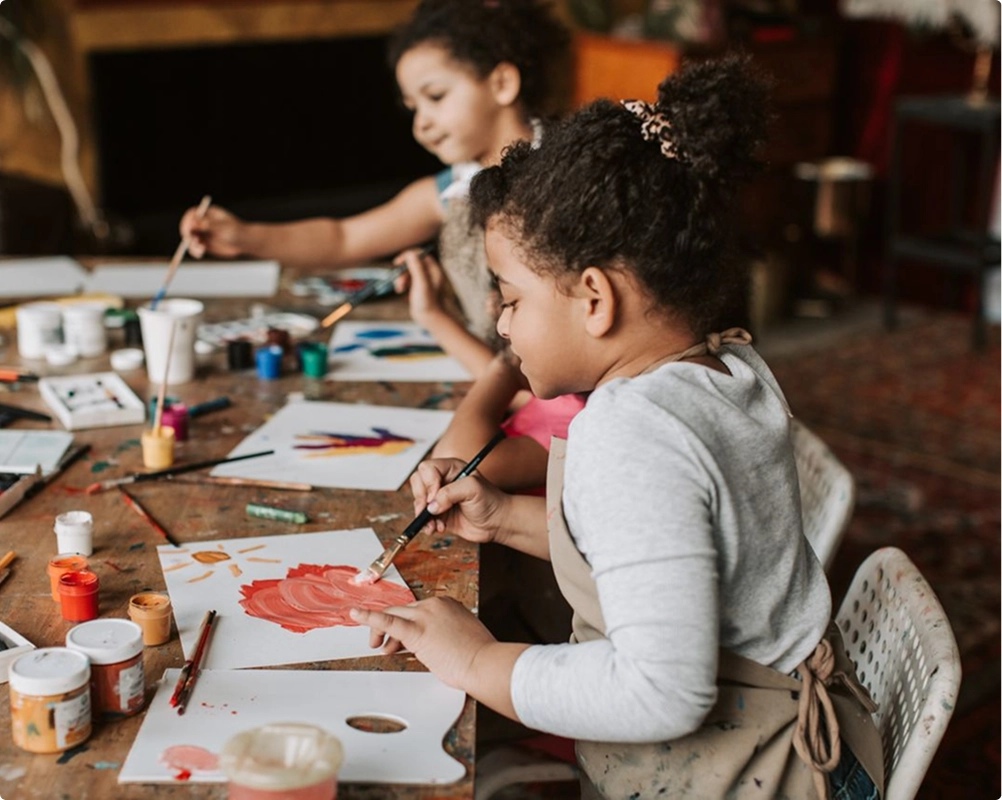
Painting, drawing, and hands-on projects give students a way to express feelings and ideas they can’t yet communicate.
A messy watercolor or a carefully glued collage can say something a child isn't yet able to speak, and our specialists are trained to notice and honor exactly that. Along the way, students are also quietly building fine motor control, focus, and patience, skills that support everything else they do in the classroom.
A finished piece is also something a child can point to and be proud of: something they made, something they chose, something entirely their own. For a student who spends much of the day being asked to communicate in ways that are hard for them, that small, visible victory matters more than it might seem.
A patient, four-legged friend who never judges.
Our much-loved therapy dog offers something no curriculum can: calm, uncomplicated companionship.
For a student working through anxiety, sensory overload, or the hard work of communication, time with a warm, patient animal can lower the stakes of a difficult moment and make it feel a little safer to try again.
Greeting a therapy dog doesn’t require words or pressure to perform, which is exactly why it works. Students who struggle to connect with people often find it easier to reach for a paw or lean into fur, and that ease has a way of carrying over, making the rest of the day feel a little less overwhelming and a little more theirs.

Zeke’s Garden: Where sensory integration and activities of daily living meet
Each spring, under the guidance of our occupational therapy team, students select new fruits, vegetables, and flowers to plant in our garden, named in honor of one of our therapy dogs. Throughout the summer and fall, they tend and harvest, learning about different foods and developing skills they will use throughout their lives.

“For my son, everything here is fun, everything is new. Getting all of this early on has been transformational.”
A Talk School Parent - lightly paraphrased for clarity
Our Approach
See how joy fits into the rest of the day
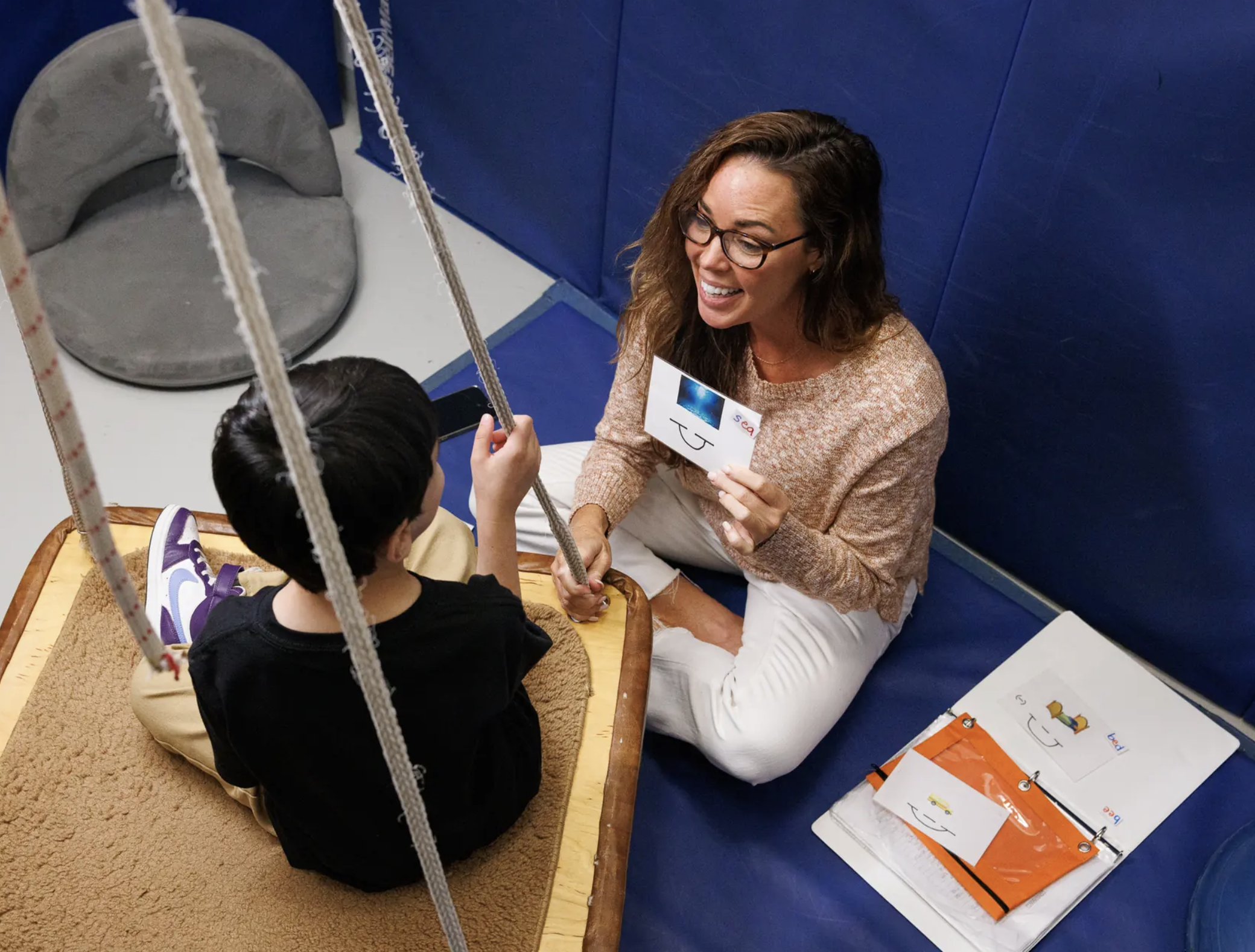
Our Therapies
Academics and therapy share the same day. See the four therapeutic approaches woven right into the classroom.
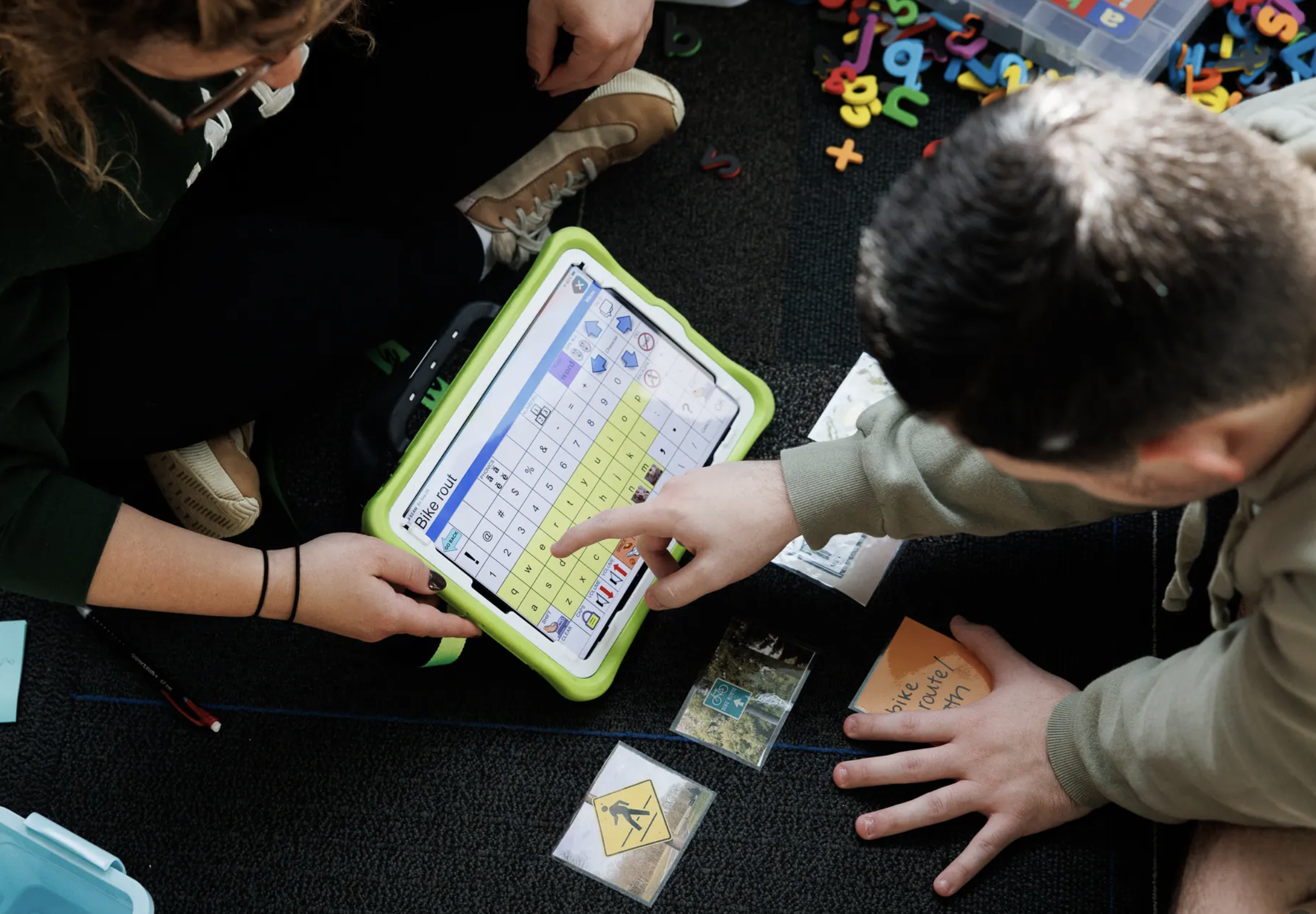
Our Methods
The Association Method and SPIRE are how language and reading are taught. See how the two curricula build on each other.
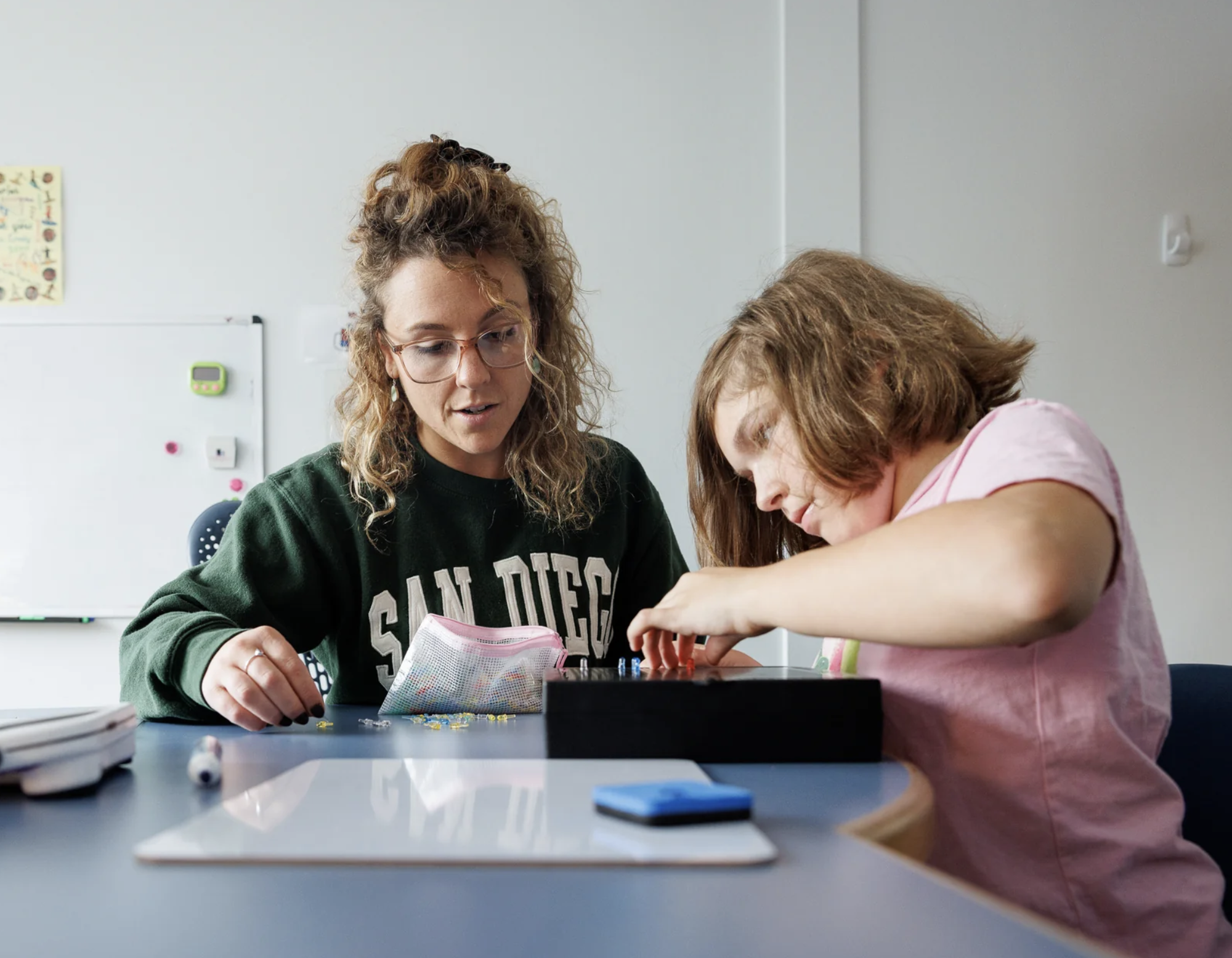
Academics
Creativity and academics go hand in hand here. See what your child actually learns, and how.
Next Step
Photos only capture so much. Come see the joy for yourself.
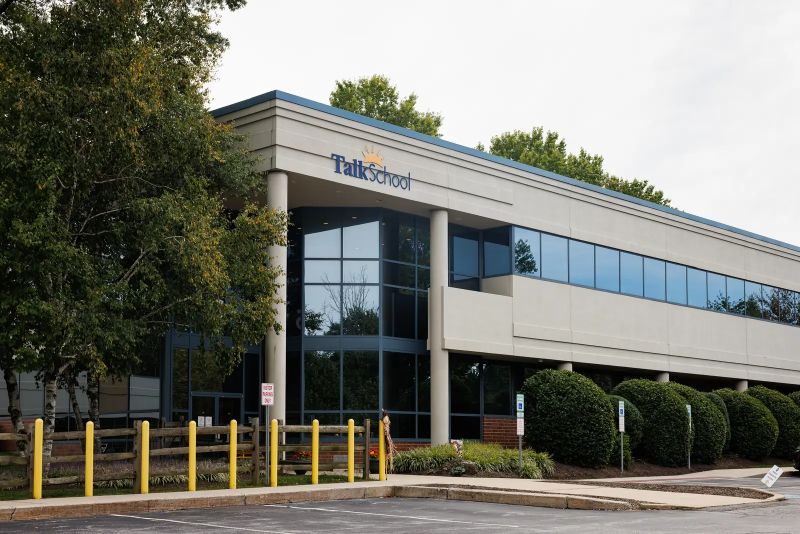
Tour The Talk School
The best way to understand Talk is to see it. Come spend time in our classrooms and watch a day unfold.
Your Path to Enrollment
Wondering how to begin? Walk through the steps, the timeline, and how enrollment is typically funded.
Frequently asked questions
Common questions about music, art, and dog therapy
Are music therapy and art led by trained staff?
Yes. These specials are facilitated by trained staff and treated as part of each student’s broader therapeutic and developmental plan, not simply free time.
Is the therapy dog safe for students with sensitivities?
Time with the therapy dog is optional and introduced thoughtfully, so students who are unsure or sensitive can choose their own level of interaction.
How often do students take part in these specials?
Music therapy, art, and dog therapy are part of every student’s week at The Talk School.
Do these specials count as therapy?
Yes. They are part of our creative and expressive therapies, supporting the same communication, confidence, and social-emotional goals as our other therapeutic work.